Private equity firms in growth mode: Laying a strong foundation and evaluating what’s important.

Growing private equity firms are finding new ways of driving value and standing out to investors by building creative and complex investment strategies. Spreadsheets and file sharing are a great starting point, but when deals are sparse and the competition is steep, emerging managers need an infrastructure that will help them go farther, faster.

Reaching the point where you need better systems to stay on top of your portfolio and meet investor demands is an exciting place to be. It is also a large growing pain that will keep resurfacing if operations aren’t put in place to last. Ask yourself- what do we need today and what do we need in 5 years from now?

Navigating the Competition
in Private Equity

The competition in private equity is steep across deal sourcing, raising capital, tech adoption, and headcount. Staying ahead of emerging private equity trends is critical, and having smooth operations is a real differentiator when you are better positioned to spot opportunities and accommodate investor requests. 

Technology partners can help absorb the impact of these challenges so you can push forward and scale. But finding the right fit can be daunting.

Private equity firms must be nimble as they navigate external and internal challenges like:

The competition in private equity is steep across deal sourcing, raising capital, tech adoption, and headcount. Staying ahead of emerging private equity trends is critical, and having smooth operations is a real differentiator when you are better positioned to spot opportunities and accommodate investor requests. 

Technology partners can help absorb the impact of these challenges so you can push forward and scale. But finding the right fit can be daunting.

Private equity firms must be nimble as they navigate external and internal challenges like:

Market uncertainty driven by macroeconomic shifts such as inflation, rising interest rates, and geopolitical volatility.

Increased reporting requesting transparency on demand and rapid responses to complex data questions.

Implementing AI to optimize operations throughout the fund lifecycle.

What to Look for in a Technology Partner

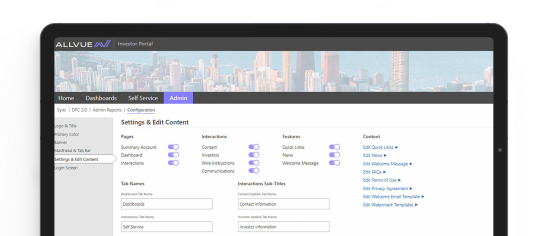
    You want a partner that lightens the workload and positions you for the next stage of success. That’s why we recommend evaluating potential vendors across four key dimensions (outlined in full in the buyer’s guide):

  • Workflow Requirements

    Does the solution address investment structure complexities and match day-to-day core accounting, investor relations, and integration needs?

  • Fit to Scale

    Can the solutions adapt as the firm grows over time?

  • Future proofed technology

    Can you integrate new sources of data, new systems, new admins into your workflow when the business or market changes?

  • Co-Sourcing

    Do you partner with a fund administrator for your back-office operations, or are you looking to onboard one?

Understanding the Technology Landscape

There are many ways private equity professionals can perform their back-office operations but finding the right tech partner with best-fit software takes consideration. In the complete guide, we walk through the options: 

There are many ways private equity professionals can perform their back-office operations but finding the right tech partner with best-fit software takes consideration. In the complete guide, we walk through the options: 

Manual workflows: Solutions commonly used to get a firm off the ground, but become hard to manage complexity

New back-office players: Dynamic software and solutions are less structured

Point solutions: Tools that specialize in certain parts of the workflow that often require complex integrations with other solutions

Enterprise platforms: Strong products and financial industry expertise but alternatives are not their only focus

Private markets platforms: Exclusively focused on end-to-end solutions for the alternatives industry

Eliminate the Risks of Just Getting By

    As growing PE shops get off the ground, a lot of their tools are fit to get by. We frequently see emerging managers run up against:

  • Accounting tasks

    being too complex to manage and reconcile manually in spreadsheets.

  • Struggling to produce

    Timely, reliable reports from disconnected systems.

  • Outdated portals

    Causing poor investor experiences.

  • Difficulty adopting

    Constantly changing best practices, regulations, or accounting and reporting needs.

What’s Inside the Private Equity Buyer’s Guide

The Private Equity Essentials Buyer’s Guide was developed specifically for emerging and growth-stage private equity managers who are ready to tackle operational pain points and find a partner that prioritizes your growth. In the complete guide, you’ll get:

The Private Equity Essentials Buyer’s Guide was developed specifically for emerging and growth-stage private equity managers who are ready to tackle operational pain points and find a partner that prioritizes your growth. In the complete guide, you’ll get:

A breakdown of the vendor landscape with clear categories and what to watch for

A structured evaluation framework with weighted criteria

Questions to ask potential vendors during the selection process

A case study showcasing how an emerging manager scaled their business by connecting operations

A preview of Allvue’s Private Equity Essentials offering, purpose built for an evolving growth strategy

Ready to Build Your Operational Foundation?

Skip to content