
March 20, 2026
Fund administration is at an inflection point, shaped by rising investor expectations, growing operational complexity, and tighter delivery economics. At Allvue and BDO’s recent Future of Fund Administration event in Jersey, we explored five structural shifts reshaping the industry and what administrators should do now to scale, differentiate, and deliver more value.
The administrators that thrive will position themselves as core enablers of their GP clients’ growth strategy and operational backbone, rather than as downstream service providers. This does not mean taking on accountability that belongs to the GP. Instead, successful administrators will expand their influence through strategic data aggregation, controlled workflows, and by providing insights that enable GPs to move faster, communicate better, operate with more confidence, and ultimately grow their businesses.
Here are five key takeaways that fund administrators should think about now.
1. Investor Transparency Is a Product, Not a Reporting Cycle.
LPs want faster answers, richer context, and the ability to explore performance and risk without waiting for a static quarterly pack. The reporting pack is not disappearing, but it is no longer sufficient as the primary way to get information about investments.
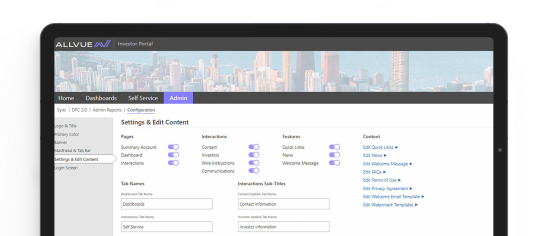
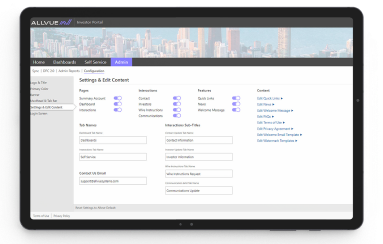
For administrators, this is a strategic opportunity. If you can help your GP client offer a more modern investor experience, you are no longer competing on service coverage and cost alone. Instead, you are helping your clients differentiate and support their marketing activities. One thing to watch out for is that “more data” is not the same as “better transparency.” The future investor experience will be one where LPs can explore data safely, with consistent definitions, traceability, and explanation, not raw exports into offline tools.
A useful starting point: inventory the most common LP questions your team handles today and identify which could become self-service options with the right governance and guardrails in place.
2. Reconciliation Is Becoming a Growth Tax. Harmonization Is the Fix.
Private markets are not getting simpler. Strategies are diversifying, structures are proliferating, and requirements around cash management, allocations, valuations, and reporting continue to grow. Each layer of complexity shows up operationally as more handoffs, more exceptions, and more reconciliation effort.
Over time, reconciliation work becomes a “growth tax.” It’s a hidden operational drag that prevents administrators from scaling margins while scaling AUA. It is also why operational teams become dependent on heroics: individuals carrying institutional knowledge that should be embedded in process.
Administrators that scale successfully will simplify their accounting and data foundation so complexity does not automatically produce fragmentation. You cannot deliver real transparency or reliable automation if your data layer is split across systems that do not reconcile cleanly. Quantifying your reconciliation burden as a percentage of close effort, identifying the top two sources of pain, and working to address them is usually the fastest way to find the highest-leverage targets for harmonization.
3. Controlled Automation: Start Where Error Rates and Audit Exposure Are Highest.
Many firms start automation where it is easiest. The better strategy is to start where it is most valuable.
Capital calls are a strong example. They sit at the intersection of high volume, high scrutiny, and high downstream impact. When a capital call requires reversal, the cost multiplies across approvals, investor communications, cash, and reporting. The operational cost is often invisible until you look at exception rates and the time spent rekeying, reconciling, and explaining changes. The question is not just speed. It is whether you can prove what happened, why it happened, and who approved it without reconstructing the story from emails and spreadsheets.
The right approach is controlled automation, not bolting AI onto a broken process. The practical approach is to pick one workflow where rework is common and downstream impact is high, then design automation with audit evidence as a first-class requirement. That is how boutiques get leverage without increasing risk.
4. Co-Sourcing Only Works When Roles, Systems, and Controls Are Explicit
Co-sourcing is an operating model where fund managers retain oversight of core functions while partnering with service providers to execute specific processes. GPs want more responsiveness and transparency, but many do not want to build large internal operations teams. Administrators can fill that gap, but only when accountability remains clear and controls remain intact.
The most effective co-sourcing models concentrate on repeatable, measurable work such as document-driven processing, data normalization, routine reconciliations, and close support. Client relationship ownership, control oversight, and regulatory accountability should not be outsourced. A RACI framework is not a box-ticking exercise; it is the mechanism that prevents co-sourcing from becoming chaos. Co-sourcing fails when processes are bespoke, boundaries are unclear, and work ends up in email threads that nobody owns end to end.
The safest models are platform-enabled. Both parties operate through shared workflows and shared audit trails, with exception handling and escalation paths defined from day one. Whether offering or consuming co-sourcing, each party should insist that work happens in controlled systems and that a formal definition of SLAs, escalation paths, and evidence requirements are defined upfront.
5. Insight-Led Differentiation: How Administrators Move Up the Value Chain
Accuracy, timeliness, and service coverage remain table stakes. The differentiator is increasingly the ability to help GPs communicate, compete, and scale.
Benchmarks and analytics differentiate administrators when they turn reporting into guidance. In practice, that means being able to say not only “here is what happened” but “here is how this compares to peers” and “here are the drivers that explain the movement.” Peer context also enables earlier intervention. If cash usage, fee patterns, or valuation cadence diverge from a relevant peer set, the administrator can flag it early and help the GP prepare a narrative before questions arise.
For this to work, anonymization, aggregation thresholds, and data governance are not optional: they are the foundation of trust. The goal is to create analysis that is specific to a GP’s business to provide relevant context that enables better outcomes. Defining two or three “insight products” your firm can deliver consistently, such as benchmarking packs, investor communication drivers, or operational performance dashboards, is a practical way to start building that capability.
The Winning Model Is Already Taking Shape
The future of fund administration is not about doing the same work faster. It is about moving up the value chain in a way that is scalable. The administrators that thrive will become part of the GP’s operational backbone and growth narrative.
Conversely, admins will be constrained in an increasingly commoditized space if they remain dependent on manual processes, fragmented tools, and person-dependent knowledge, as that model becomes brittle with increasing complexity. The window to build the right foundation is now.
How Allvue Supports the Future Operating Model for Fund Administrators
Allvue’s platform direction directly addresses these themes while enabling greater transparency, efficiency, and connection in private markets.
OneLedger unifies fund accounting and investment accounting in a single, integrated ledger, eliminating reconciliation gaps and providing a consistent, real-time foundation for reporting and operations.
As part of our data and analytics offering, Nexius Data Platform unifies data across systems, supports automation, and creates a trusted foundation for scalable reporting, analytics, and operations. Nexius Intelligence delivers anonymized benchmarks and actionable insights from governed data, enabling administrators to provide objective peer context and elevate conversations with GPs and investors.
Allvue’s Agentic Platform embeds AI into operational workflows, enabling intelligent automation, exception handling, and human-in-the-loop control with full auditability. Andi Insights enables natural language access to fund and operational data, allowing teams to quickly surface answers, generate insights, and interact with complex datasets without relying on static reports.
For more information, reach out to your Allvue representative or contact us today.